IBS vs IBD — What's the Difference?
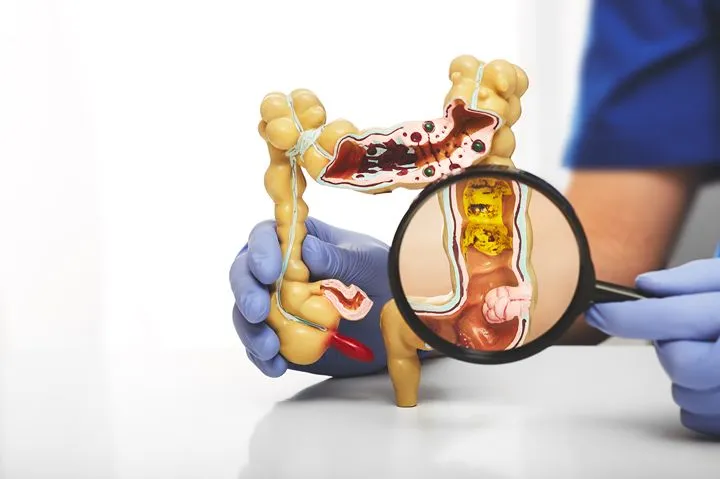
IBS (Irritable Bowel Syndrome) and IBD (Inflammatory Bowel Disease) are among the most commonly confused conditions in gastroenterology. The abbreviations are similar, some symptoms overlap, and both affect the digestive system. But they are fundamentally different in their nature, their investigation, their treatment and their long-term implications — and understanding the distinction is clinically important.
The Core Difference
The most important distinction is this: IBS is a functional disorder; IBD is an autoimmune disease.
IBS involves no immune response. The gut looks entirely normal on investigation — there is no inflammation, no ulceration, no damage to the intestinal lining. Symptoms arise from changes in how the gut functions: altered motility, visceral hypersensitivity and disrupted gut-brain communication. The immune system is not attacking the gut. A colonoscopy in a person with IBS appears normal, and blood markers of inflammation are not elevated.
IBD is driven by an abnormal immune response. In Crohn's disease and ulcerative colitis, the immune system mistakenly identifies the lining of the gastrointestinal tract as a threat and mounts an attack against it. This produces chronic, sustained inflammation that causes real structural damage — visible ulceration, bleeding, thickening of the bowel wall, and over time, scarring and narrowing of the intestine. It is this misdirected immune response, not a functional communication problem, that defines IBD and separates it categorically from IBS.
This immune-versus-functional distinction explains why the two conditions require completely different management. IBS responds to dietary modification, gut-brain therapies and lifestyle change — interventions that address functional and neurological dysregulation. IBD requires medications that directly suppress or modulate the immune response: aminosalicylates, corticosteroids, immunosuppressants and biologics. Treating IBD with a Low-FODMAP diet alone would be as inappropriate as treating IBS with immunosuppressants.
What is IBD?
Inflammatory Bowel Disease is an umbrella term for two distinct conditions: Crohn's disease and ulcerative colitis. Both involve chronic, relapsing inflammation of the gastrointestinal tract — but they differ in location and pattern.
Crohn's disease can affect any part of the GI tract from mouth to anus, and inflammation occurs in patches that extend through all layers of the bowel wall. Ulcerative colitis is confined to the colon and rectum, and inflammation is continuous and limited to the innermost lining (mucosa). Both conditions involve periods of active disease (flares) and remission.
IBD is an immune-mediated condition — the immune system abnormally attacks the gut, producing the characteristic inflammation. The exact cause is not fully understood but involves a combination of genetic predisposition, gut microbiome alterations, environmental triggers and immune dysregulation.
Symptom Comparison
| Symptom | IBS | IBD |
|---|---|---|
| Abdominal pain | Yes — often relieved by bowel movement | Yes — may persist after bowel movement |
| Diarrhoea | Common (IBS-D and IBS-M) | Common, often urgent and frequent |
| Rectal bleeding | Not typical of IBS — see your GP | Common in ulcerative colitis |
| Bloating | Very common | Can occur during flares |
| Unintentional weight loss | Not typical — see your GP | Common in active IBD |
| Fever | Not a feature of IBS | Can occur during flares |
| Fatigue | Common | Common, often severe |
| Nocturnal symptoms | Rare — symptoms typically don't wake you | Can wake patients at night |
A key clinical flag: IBS does not typically cause rectal bleeding, unintentional weight loss, nocturnal symptoms that wake you from sleep, or fever. If you have a diagnosis of IBS and are experiencing any of these, see your GP — they are alarm features that warrant further investigation regardless of a prior IBS diagnosis.

Diagnosis and Investigation Comparison
| Investigation | IBS Result | IBD Result |
|---|---|---|
| Full blood count (FBC) | Normal | Anaemia possible; raised white cells |
| CRP / ESR | Normal | Elevated in active disease |
| Faecal calprotectin | Normal (<50 µg/g) | Elevated — marker of gut inflammation |
| Colonoscopy | Appears entirely normal | Shows inflammation, ulcers, bleeding |
| Biopsy (from colonoscopy) | Normal | Shows characteristic inflammatory changes |
| MRI / CT scan | Normal | May show bowel wall thickening, abscesses |
Faecal calprotectin is the most useful first-line test for distinguishing IBS from IBD in primary care. It is a stool test that measures a protein released by white blood cells in an inflamed gut. A normal result makes IBD very unlikely and supports an IBS diagnosis; an elevated result prompts referral for colonoscopy. Your GP can request this test.
Treatment Comparison
| Treatment Area | IBS | IBD |
|---|---|---|
| Diet | Low-FODMAP, trigger avoidance, soluble fibre | Supports nutrition; does not treat inflammation |
| Medications | Antispasmodics, laxatives, loperamide, antidepressants | Aminosalicylates, corticosteroids, immunosuppressants, biologics |
| Psychological therapy | CBT, gut-directed hypnotherapy — strong evidence | Supportive role; does not treat inflammation |
| Surgery | Not required for IBS | Required in some cases of Crohn's or UC |
| Specialist care | GP-led in most cases; gastroenterologist for complex cases | Gastroenterologist-led throughout |
Can You Have Both IBS and IBD?
Yes — it is possible to have both conditions simultaneously. People with IBD in remission sometimes continue to experience IBS-type symptoms (bloating, altered bowel habit, abdominal pain) even when objective markers of inflammation are normal. Research suggests this occurs in a significant minority of IBD patients and may reflect lasting changes to gut motility or visceral sensitivity caused by prior inflammation.
Managing this overlap requires careful coordination: treating underlying IBD inflammation takes priority, but IBS-directed approaches (dietary modification, psychological therapies) may be helpful for residual functional symptoms once IBD is in remission. This should always be guided by a gastroenterologist.
When to See Your GP
If you have not yet been assessed by a GP for your bowel symptoms, do so. Do not attempt to self-diagnose IBS or assume your symptoms are not IBD without clinical assessment. The following features in particular require prompt GP review:
- Rectal bleeding or blood in the stool
- Unintentional weight loss
- Symptoms that wake you at night
- Persistent fever alongside bowel symptoms
- A first presentation of bowel symptoms after the age of 50
- A family history of IBD or colorectal cancer
These features do not necessarily indicate IBD or anything serious — but they need investigation to rule it out. IBS is a diagnosis of exclusion, reached after other conditions have been appropriately considered.
Frequently Asked Questions
No. IBS does not progress to IBD. They are entirely distinct conditions with different underlying mechanisms. Having IBS does not increase your risk of developing Crohn's disease or ulcerative colitis.
IBD produces measurable abnormalities: elevated CRP, ESR and faecal calprotectin on blood and stool tests, and visible inflammation on colonoscopy. IBS produces none of these — blood tests and colonoscopy are normal. Faecal calprotectin is the most useful first-line test to distinguish between the two and is available through your GP.
Yes. Some people with IBD in remission experience ongoing IBS-type symptoms even when objective inflammation markers are normal. Management of this overlap requires guidance from a gastroenterologist and often a specialist dietitian.
In terms of physical consequences, yes. IBD causes structural damage to the gut, may require immunosuppressant medication or surgery, and carries an increased risk of colorectal cancer with long-standing disease. IBS is not life-threatening, does not damage the gut and does not increase cancer risk. However, IBS can significantly impact quality of life and should not be dismissed as trivial — it deserves proper management in its own right.
IBS.ie
Ireland's dedicated IBS information resource. We provide evidence-based, HSE and PubMed-referenced content on irritable bowel syndrome — covering symptoms, diet, gut health and management. All content is for general information only. Always consult your GP or a qualified specialist for personal medical advice.
Related Articles


Sources & References
Lacy, B.E., et al. (2016). Bowel Disorders. Rome IV Criteria. Gastroenterology. View on PubMed ↗
Ordás, I., et al. (2012). Ulcerative colitis. The Lancet. View on PubMed ↗
Waugh, N., et al. (2013). Faecal calprotectin testing for differentiating amongst inflammatory and non-inflammatory bowel diseases. Health Technology Assessment. View on PubMed ↗
HSE. Irritable Bowel Syndrome. View on HSE.ie ↗
NHS. Inflammatory Bowel Disease. View on NHS.uk ↗